The other day, I decided to change the font size of the web-based Japanese learning materials I’ve been creating.
So far, not many learners have complained about the font size, but it must have been hard to read. The furigana (the small hiragana written above kanji) was especially tiny and difficult to see. Perhaps everyone was simply being considerate and chose not to say anything.
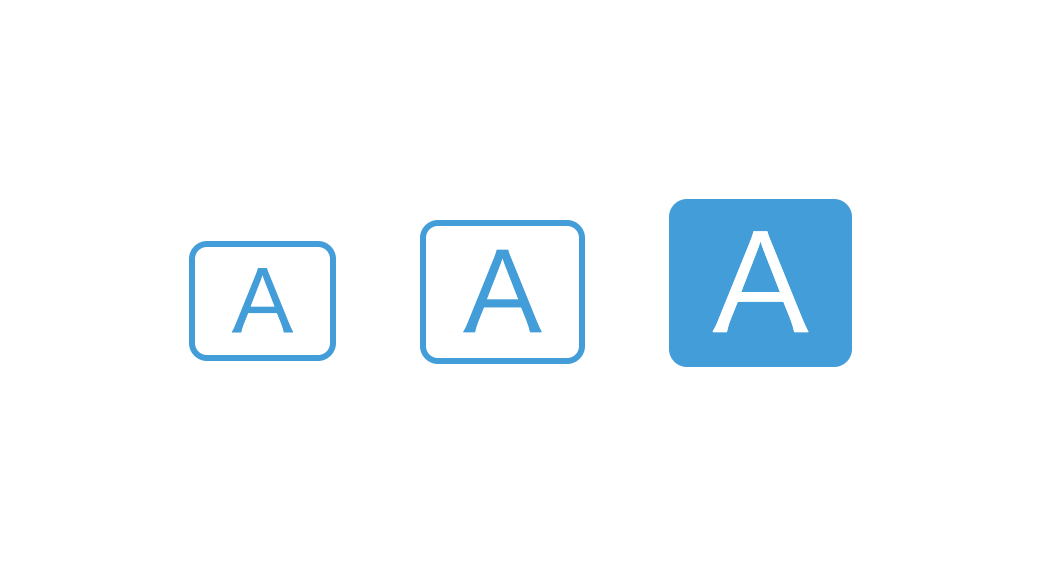
At first, I tried adjusting the font size of each individual piece of material by hand. Eventually, though, I gave up on that approach and instead added font size adjustment buttons to each page, allowing users to change the size themselves, as you can see at the top right of this article.
While setting up these buttons, ChatGPT helped me solve a number of problems along the way. AI doesn’t just provide knowledge; it can also offer wisdom.
- Existing Plugins: Just Didn’t Work with My Website
- ChatGPT Wrote the Code for Me
- An Ideal Solution for My Needs
- ChatGPT Scores Perfect Marks One After Another in University Entrance Exams
- In Fact, the Idea of Font Size Buttons Also Came from AI
- Egg of Columbus
- “Internet Rich in Knowledge yet Poor in Wisdom”: Is That Already in the Past?
- AI Doesn’t Just Provide Knowledge: It Helps When Our Thinking Gets Stuck
- We Are Being Asked to Redefine “Intelligence”
- Only Humans Can Enjoy Aporia
Existing Plugins: Just Didn’t Work with My Website
I tried installing several plugins that add font size buttons, but none of them worked well with my site’s design. The text simply didn’t scale the way it was supposed to.
They seemed to conflict with the font size settings I already had in place. Even after consulting ChatGPT, I couldn’t resolve the issue using plugins alone. Instead, ChatGPT suggested that I write my own code tailored specifically to my website.
ChatGPT Wrote the Code for Me
ChatGPT then went on to generate specific CSS and JavaScript code for me.
When I actually implemented it, the design wasn’t quite what I had envisioned. After I told it that I wanted to tweak the appearance of the buttons, it instantly produced a revised version of the code to match my preferences. How convenient is that!
To add this kind of dynamic behavior to a website, you normally need to write JavaScript. I have a decent grasp of HTML and CSS, but I had never touched JavaScript even once.
Even so, simply by copying and pasting the JavaScript code ChatGPT created, I was able to set up simple, and fully functional font size buttons on my website.
An Ideal Solution for My Needs
For materials designed for absolute beginners, such as hiragana and katakana lessons, I use an extra-large font size of 48 pixels. The font size buttons don’t interfere with that setting at all. Those materials remain at 48 pixels exactly as intended. For me, that makes this solution ideal.
People often say that AI is reducing the demand for IT engineers, and this experience made that claim feel very real to me.
One Area Where Humans Can’t Compete with AI: Instant Coding
If I had outsourced the implementation of these buttons to an engineer, it would naturally have cost both time and money. And if, after seeing the finished result, I had asked for small changes, it would have taken even more time.
This time, however, ChatGPT wrote the code instantly and revised it just as quickly to match exactly what I wanted. In fact, I probably spent more time manually adjusting the button size and making sure the design didn’t sit too far to the right than ChatGPT spent generating the code.
And on top of all that, it was free. It’s hard to believe!
ChatGPT Scores Perfect Marks One After Another in University Entrance Exams
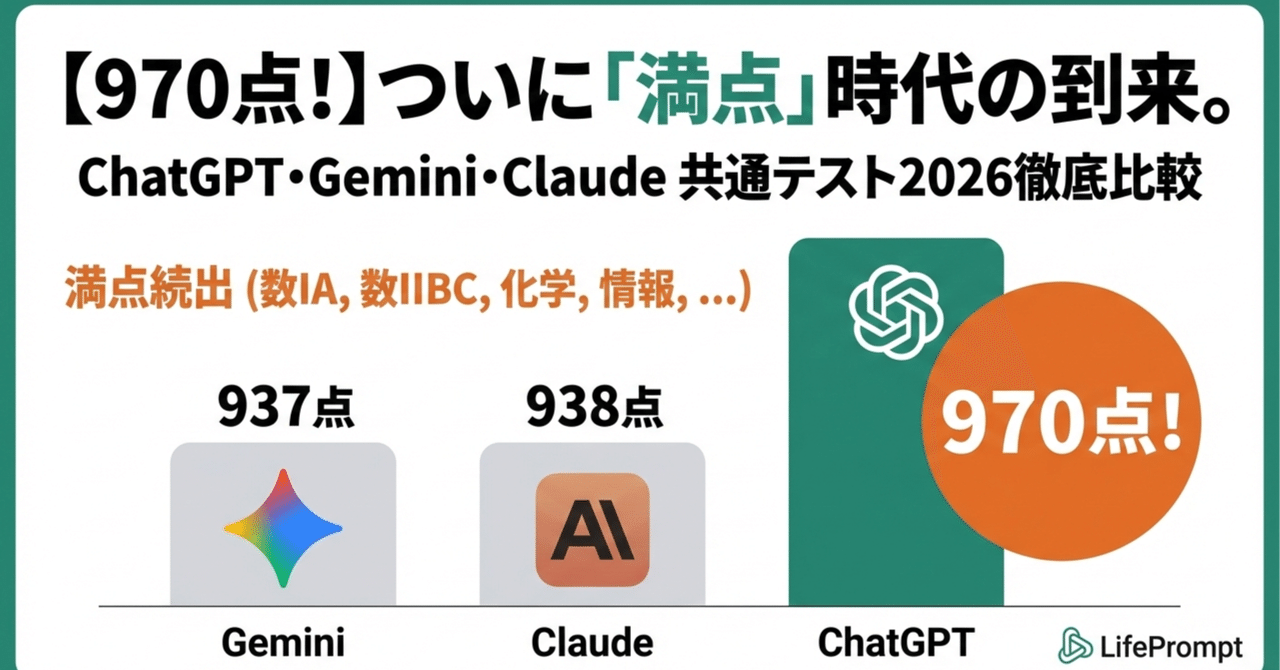
Recently in Japan, the nationwide university entrance exam, known as the Common Test (共通テスト), was held, and reports say that ChatGPT achieved perfect scores in 9 out of 15 subjects.
- Civics, Politics and Economics (公共・政治・経済)
- Mathematics I–A (数学1A)
- Mathematics II–B–C (数学2BC)
- Chemistry (化学)
- Basic Physics (物理基礎)
- Basic Chemistry (化学基礎)
- Basic Earth Science (地学基礎)
- Basic Biology (生物基礎)
- Information I (情報1)
Most of these are STEM-related subjects. They mainly involve solving problems with predetermined answers based on formulas and data, which makes them extremely well suited to AI.
Coding falls squarely into this category as well. Generating optimal code by referencing vast amounts of data is exactly what AI excels at.
In the near future, it may become completely normal to rely on AI for coding.
Of course, humans will still be needed to review, maintain, and supervise these systems, so programmers won’t disappear entirely. Even so, demand is likely to drop significantly compared to today.
In Fact, the Idea of Font Size Buttons Also Came from AI
In the age of AI, we often hear statements like these:
- “AI is just referencing databases.”
- “Humans, unlike AI, can think autonomously.”
- “What really matters is developing logical thinking skills.”
I agree with all of them. And yet, the original idea to use font size buttons came from ChatGPT as well. Sometimes, AI can arrive at more useful ideas than humans do.
At first, I was trying to manually increase the font size in every single piece of material I had created. The work was so monotonous and overwhelming that I ended up turning to AI in desperation on the very first day:

ChatGPT-san, this font size work is exhausting… isn’t there some way to automate it?
You could increase the font size globally with CSS.
This was a solution I had already considered. But there were also sections where I didn’t want the text to be larger:
- Parts learners read on their own for preparation
- Materials intended for advanced learners
- General site pages such as the home and blog posts
If I changed the font size globally with CSS, I would lose that flexibility. When I explained this to ChatGPT, it responded:
Then you should add font size buttons and let users choose the size themselves.
…!!
For me, that moment was a perfect example of Columbus’s egg.

Egg of Columbus

- After Christopher Columbus returned from the New World, some nobles claimed that anyone could have made the same discovery.
- In response, Columbus challenged them to make an egg stand upright on a table.
- No one could do it.
- Columbus then gently cracked the bottom of the egg and made it stand.
- When the nobles objected, he replied that it was easy after being shown how.
The story illustrates how a solution can seem obvious only once someone has demonstrated it.
I had seen buttons like this countless times on other websites. And yet, the idea of adding font size buttons to my own site never crossed my mind even once.
That was probably because I had always been creating my materials entirely on my own, from scratch. I felt as though setting the “optimal” font size for learners was my duty, almost a responsibility that came with being a Japanese tutor.
What Is the Optimal Font Size for Learners?
However, when you really stop to think about it, there’s no single “optimal” font size for learners. Someone studying on a large desktop monitor and someone learning on a smartphone will naturally need different sizes. On top of that, everyone’s eyesight is different.
If that’s the case, the design should allow learners to adjust the font size themselves. Why didn’t I realize something this simple sooner? All I can say is that I feel rather foolish in hindsight.
Perhaps for someone like me, shaped by habit and bias, it was difficult to arrive at such a “simple idea,” much like the nobles who couldn’t make the egg stand upright.
“Internet Rich in Knowledge yet Poor in Wisdom”: Is That Already in the Past?
There’s a well-known, cute tanuki (Japanese raccoon dog) image that often circulates on the Japanese internet, accompanied by the line:
おおインターネット
知識多く知恵少なきインターネットよTranslation:
Oh Internet
Rich in knowledge, yet poor in wisdom, Internet

The tanuki is simply trying to buy roasted sweet potatoes online, yet he speaks in such an overly dramatic way that the whole scene feels strangely surreal.

Before the rise of generative AI, I believe the phrase “Internet rich in knowledge yet poor in wisdom” was, in many ways, an accurate description.
AI Doesn’t Just Provide Knowledge: It Helps When Our Thinking Gets Stuck
Recently, though, I’ve realized that I’ve been gaining not only knowledge but also wisdom from the generative AI on the Internet.
Every morning, I used to spend about fifteen minutes making bacon-and-egg toast, repeating the same cycle: arranging the ingredients, heating them, letting them sit with residual heat, heating them again, and letting them rest once more.
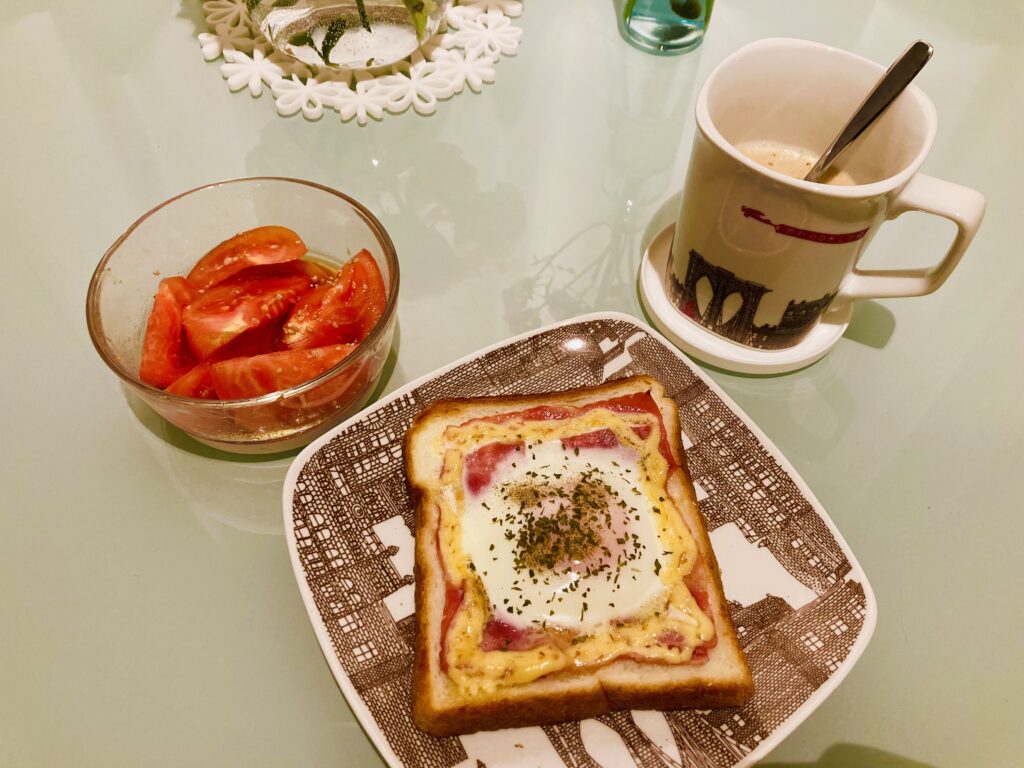
That felt a bit too long, so I asked ChatGPT whether there was a way to speed things up. It gave me some excellent advice:
If you break the egg yolks at the start, you can shorten the cooking time. The oven takes a while to really get going, so you should turn it on while you’re laying the bacon on the toast. Five minutes of heating is more than enough.
When I tried this approach, not only did the cooking time drop, but the yolks were no longer scalding hot. The eggs warmed evenly throughout, making them ready to eat right away.
Taking into account the time I used to spend letting the food cool, this saved me about ten minutes in total. Ten minutes in the morning is precious, yet I had been wasting those ten minutes for years.
There’s no real need for the fried eggs to look perfect since breakfast is something I eat alone and never show to anyone. That way of thinking was exactly like Columbus crushing the bottom of the eggto make it stand.
Generative AI can sometimes view problems from outside the mental frameworks and biases that trap us.
We Are Being Asked to Redefine “Intelligence”
Just the other day, the mathematician Terence Tao made the following remark on the definition of intelligence:
This resonates strongly with how I’ve been feeling lately. If ChatGPT were presented with the riddle of Columbus’s egg, it might arrive at the answer through a process like this:
- Refer to a vast dataset of images of eggs
- Find images in which eggs appear to be standing upright with cracked bottoms
- Based on that, reply: “Tap the egg on the table and crack the bottom.”
It may be artificial intelligence, but this process hardly looks like genuine “intelligence.” And yet, the final answer is exactly the same as Columbus’s. If we label ChatGPT’s response as “non-intelligent” and a human’s response as “intelligent,” then what, precisely, is the difference?
Or perhaps what we have long regarded as “intelligence” was never all that extraordinary to begin with, just as Tao implies.
This is an aporia that we, living in the age of AI, must now confront.
Only Humans Can Enjoy Aporia

“Aporia” is a state of puzzlement or doubt that arises when we encounter a question with no clear or definitive answer. The term comes from ancient Greek philosophy, where it was used to describe moments in which logical reasoning reaches an impasse.
The question I’m facing right now is probably something I could simply hand over to AI and receive an instant answer for. But for the time being, I want to sit with it and think it through on my own.
One thing I can say with certainty is this: the ability to enjoy aporia is something only humans possess.